Last week, via a brief SEC filing, Broadcom (AVGO) and Apple (AAPL) revealed an expanded “custom silicon” (or ASIC, application-specific integrated circuit) deal lasting through 2031.
Today, we received a bit more detail on the expanded Apple-Broadcom agreement (Broadcom has been an Apple supplier for years, even as Apple has slowly divorced itself from Qualcomm).
According to Apple, it is committing $30 billion to get various semiconductor solutions from Broadcom over the next five years, including ASIC design work. Part of the consideration includes Broadcom getting $1.5 billion to revamp its Fort Collins fab (remember, that’s why we call Broadcom a mostly fabless chip designer).
The Fort Collins fab handles a lot of Broadcom’s internal wireless solutions, like FBARs (Film Bulk Acoustic Resonators). A separate fab in the Lehigh Valley, PA, handles the InP (indium phosphide) wafers and chips used in Broadcom’s optical networking products.
Based on the details from Apple, mobile connectivity will feature prominently, so it doesn’t exactly sound like Apple is planning to get into the data center biz with this Broadcom expansion. That’s a good thing, in our opinion. https://www.apple.com/newsroom/2026/07/apple-to-increase-spend-with-broadcom-to-produce-billions-more-us-chips/
The end of an Apple era, not just the final months of CEO “Tim Apple”
Is this the end, or at least an easing, of Apple being able to wield immense control over its semiconductor and electronics component suppliers? The mobile and compute device giant has “squeezed” its suppliers for the better part of two decades now, using tactics like buying in bulk and asking for steep discounts (Micron a couple weeks ago claiming Apple tried to take advantage of cheap memory prices during the last bear market and turning around and complaining about expensive memory in 2026); pitting multiple suppliers against each other to get best pricing; or the idle threat of bringing silicon design in-house (Apple’s own Arm-based processors, or ditching Qualcomm’s mobile modem chipsets).
But Apple has been under political pressure to bring more of its supply chain back to the U.S. The onshoring push for one of the U.S.’s largest companies is significant, because most of its supply chain — worth over $230 billion in COGS (cost of goods sold) over the last reported 12 months, much of it spent on semiconductors and other hardware — is located outside the U.S.
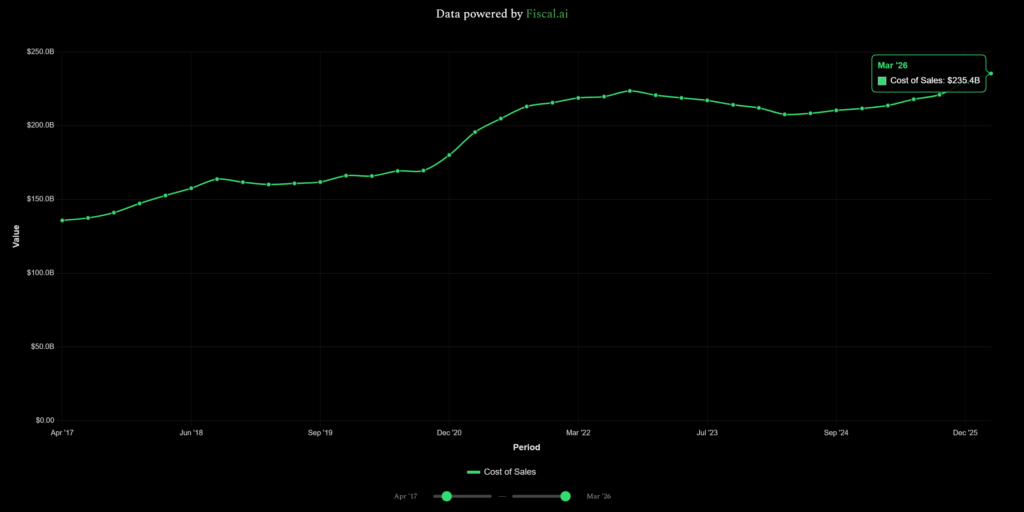
Image source: Chip Stock Investor Research Dashboard.
We discussed this dynamic causing some serious hardship for Apple suppliers in past write-ups (like this one regarding the merging Skyworks Solutions and Qorvo). But the tide is shifting as geopolitics change the name of the game. Manufacturing and infrastructure is in style right now, and all indications are this trend will continue for the foreseeable future. The Apple-Broadcom agreement, at least, indicates through 2030-31 timeframe.
Expect some bumps on the road along the way.